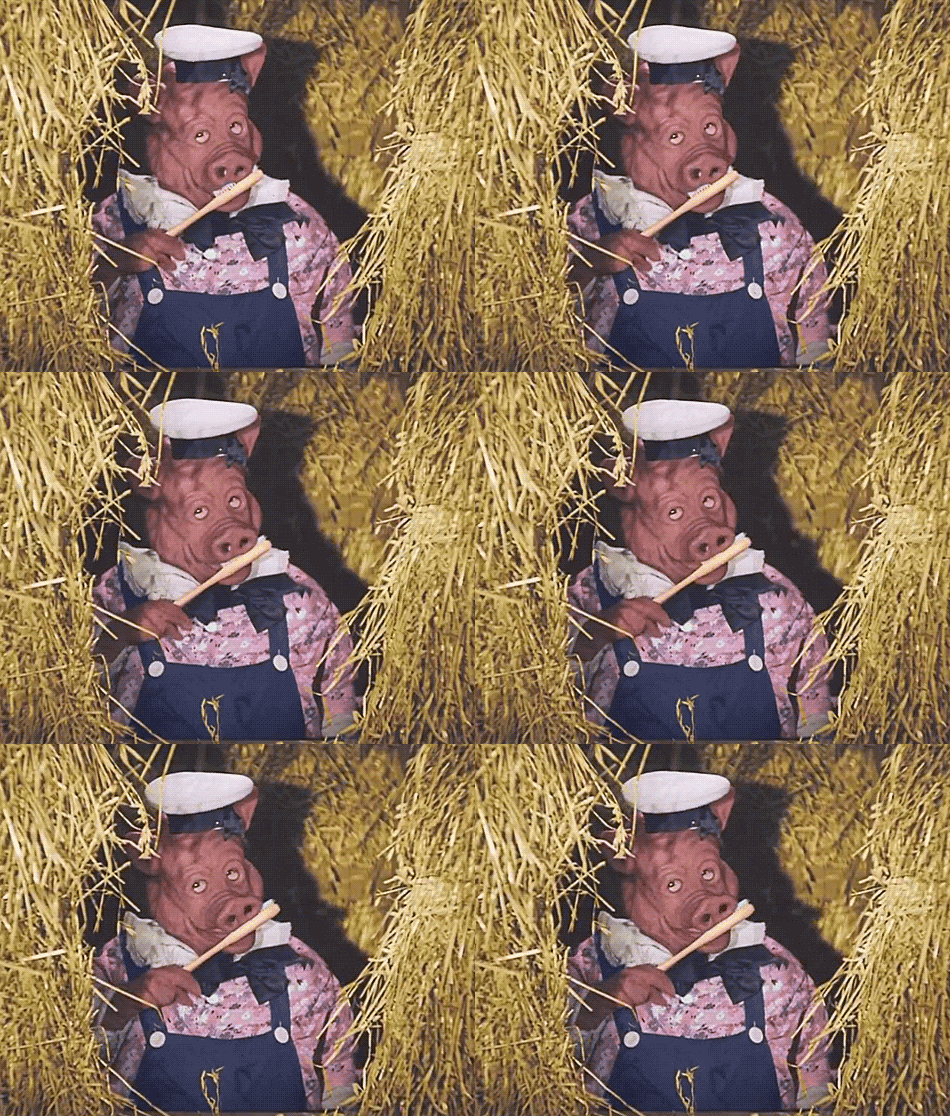
The Three Little Pigs & The Big Bad Publisher
Some indie authors build with straw. Some with sticks. When a micro-publisher hijacks your listing, you find out fast which house you built — and what it takes to defend it.

Recently, I had to pull a client’s book, change the cover, and republish it as an ‘Anniversary Edition’.
We had to pack up and move to a new, safer home.
The rights to sell our books were caught in the crossfire of a messy legal transition.
Our author’s original publisher was bought out by a massive conglomerate competitor.
Suddenly, this “big bad publisher” was squatting on our listing. They hijacked the Buy Box, artificially tanked the price, and were collecting the royalties that rightfully belonged to the author.
When the news came, we were legally deadlocked. We couldn’t win the Buy Box because the algorithm favored the conglomerate’s massive seller authority and their undercut pricing.
Our original listing—our straw house—had been blown down.
We were forced to bypass Amazon’s ASIN restrictions entirely while we built a case against them. And that’s what we did!
Finding shelter.
How did we protect the author’s livelihood in the meantime? We built a brick house.
We created a completely new landing page, changed the cover and the title to reflect the differences of the ‘Anniversary Edition’, and submitted it as a brand-new product.
It worked. We had a safe harbor. But solving the legal hurdle created a massive conversion problem: we now had a brand-new listing with zero reviews, competing directly against the older, cheaper, heavily-reviewed version of the exact same book.
We started sending Top-of-Funnel traffic to our new listing, but naturally, a lot of it bounced. Buyers would click our ad, see the cheaper hijacked version sitting right there in the search results, and buy from the wolf instead.
It’s a brutal friction point. But the true strength of Amazon advertising is its granularity. You just have to force the momentum, build a new conversion history, and starve the competitor out.
Killing our Audience.
In-market and lifestyle audiences were costing 2x our baseline for ToFu traffic. Scaling wasn’t plausible, and the terrible detail page view rates were telling us to look elsewhere. The broad audiences were walking up to the house and immediately turning around.
Instead, I shifted that display budget to target the categorical level for visits. It cut the traffic cost in half and brought in significantly better engagement.
We also allowed the brand campaigns to run broad match on the author’s pen name, pulling in high-intent clicks for 10-20 cents. (Note: It’s important to make sure that your audience is aware of the new edition via your newsletter or socials before doing this!)
The Results. Eventually, the big bad wolf ran out of breath.
Between our relentless targeted ad strategy starving their organic sales, and the mounting pressure from our legal case, the conglomerate finally backed off. We won back our original listing, regained the Buy Box, and recovered all those hard-earned reviews.
But here is the best part: in the transition, we picked up some massive structural wins. By being forced to rebuild our ad strategy from the ground up, the account is now running leaner and meaner than ever.
We walked away with a 300% increase in total funnel cost efficiency and a +37% increase in purchases over the last 7 days.
The lesson? If an audience isn’t pulling its weight, kill it and fund something else. And if a publisher tries to blow your listing down, build a better house.
Thank You!
Reclaiming the listing is the first half. A hijacked page usually leaves conversion damage behind it, and repairing a book with bad conversion history is the slower job.